







Are Those Termites or Flying Ants? What Visalia Homeowners Should Look for This Fall
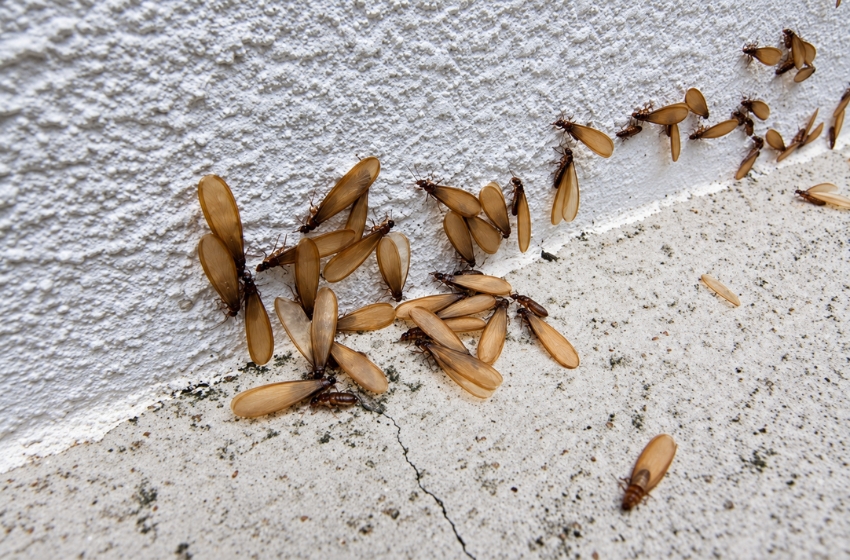
Finding a cluster of winged insects around a Visalia home can be confusing, especially when they disappear almost as quickly as they arrived. Flying ants and termite swarmers can look similar from a distance, but they represent different pest problems and require accurate identification. Learning a few physical differences can help you make a preliminary comparison, while professional termite control in Visalia can provide a closer evaluation when the insects or discarded wings appear around your home.
Why Termites and Flying Ants Look So Similar
Most homeowners recognize ordinary worker ants, but reproductive ants look different because they have wings. Termite reproductives also develop wings before leaving an established colony to disperse and form new colonies.
Both insects can appear in groups and may collect around windows, doors, exterior lights, or other bright areas. When they are moving quickly, their overall size and dark appearance can make identification difficult.
The confusion becomes greater when the insects have already disappeared and all that remains is a collection of wings. Looking closely at an intact specimen provides much better information.
Compare the Body Shape
Ants have the narrow waist most people associate with their familiar body shape. The separation between the middle and rear portions of the body is usually visible when the insect is viewed closely.
Termites have a broader and more uniform body profile. Their shape tends to look straighter from front to back without the pronounced narrow waist seen on ants.
A clear close-up photograph can preserve these details after the insects are gone. Keeping one intact specimen in a small container can also make professional identification easier.
The Wings Provide Another Useful Clue
Termite swarmers generally have two pairs of wings that are similar in length. When those wings are extended, they create a fairly uniform appearance around the body.
Winged ants also have two pairs of wings, but the front pair is noticeably larger than the rear pair. This difference can be difficult to see while the insect is flying, so an insect that has landed is much easier to examine.
Termite swarmers shed their wings after their dispersal flight. Small piles of similar-looking discarded wings around windowsills, doors, or floors can therefore provide an important clue even when the insects themselves are no longer present.
Look at the Antennae
Ant antennae usually have a noticeable bend or elbow. Termite antennae appear straighter and have a more bead-like appearance.
Body shape, wings, and antennae are most useful when considered together. Color alone is less dependable because ants and termite swarmers can both appear in various shades of brown or darker colors.
If the insect is damaged or difficult to examine, save what you can and make a note of exactly where it was found.
Indoor Swarmers Should Be Investigated
Winged insects outdoors may originate from colonies somewhere in the surrounding environment. Termite swarmers appearing inside a home deserve closer attention because their emergence may be connected with the structure.
Windows often become collection points because swarmers move toward light. A homeowner may find insects or discarded wings along a sill without seeing where they originally emerged.
The number of insects does not tell you the exact size or location of a colony. Even a smaller indoor emergence can provide useful evidence that should be evaluated.
Termite Activity Can Stay Hidden
Much of a termite colony’s activity occurs inside wood, soil, or protected travel routes. Homeowners may therefore have limited visible evidence until swarmers appear or damage becomes easier to recognize.
Depending on the termite involved, an inspection may look for shelter tubes, damaged wood, discarded wings, pellets, or other signs associated with activity. Some of these clues can be subtle or easy to confuse with ordinary debris.
A professional inspection provides a clearer picture of what is happening around the structure and whether the winged insects are connected with termite activity.
Flying Ants Require Their Own Identification
Winged ants can also appear in significant numbers around a home. Their presence points toward an active ant colony, but the nesting location and control strategy are different from those associated with termites.
Ant colonies can establish in soil, landscaping, pavement areas, structural spaces, or other protected locations. Visible workers may provide clues about where they are entering, although the nest itself can be some distance away.
Correct identification keeps the response focused on the pest that is actually present.
Preserve Evidence Before Cleaning
A sudden appearance of winged insects usually leads to quick cleanup, but taking a few minutes to document the activity can make an inspection much more productive. Photograph the insects and the area where they appeared before vacuuming or sweeping.
Save an intact specimen or several discarded wings when possible. Make a note of the room, window, door, or exterior location where the activity occurred and approximately when you noticed it.
These details remain useful even if the swarm has completely ended by the time the property is inspected.
Termites and flying ants can be difficult to distinguish during a brief swarm, and accurate identification determines what should happen next. If winged insects or unexplained piles of wings appear around your Visalia home this fall, contact San Joaquin Pest Control to request an inspection and find out which pest you are dealing with.