







From Orchards to Attics: How Central Valley Agriculture Can Drive Rodents Toward Nearby Homes
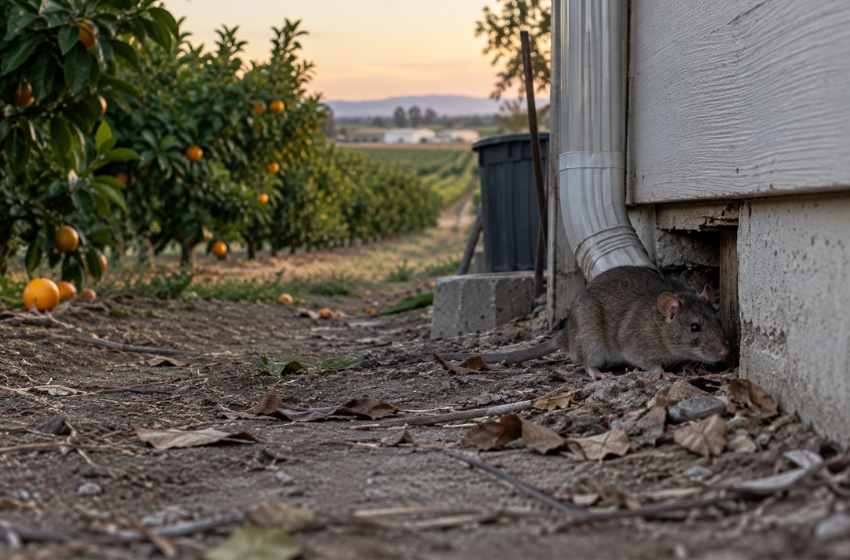
Agriculture shapes daily life throughout the Central Valley, and it also influences the way rodents move through the region. Orchards, fields, irrigation systems, equipment areas, barns, and crop storage can provide food, water, cover, and nesting opportunities for mice and rats. As harvesting and other agricultural activity change those conditions, rodents may begin exploring nearby residential properties, making professional rodent control in Visalia especially relevant for homes near agricultural areas.
Rodents Have Plenty of Habitat Around Agricultural Areas
The agricultural landscape of the Central Valley provides many of the resources rodents use. Vegetation offers cover, crops and fallen agricultural products can provide food, and irrigation infrastructure creates access to water. Equipment, storage areas, field edges, sheds, and other protected locations add places where rodents can remain relatively undisturbed.
Those conditions change throughout the year. Crops mature and are harvested, fields are cleared, vegetation is cut back, irrigation schedules shift, and equipment moves through areas that may have provided rodents with dependable shelter.
Rodents respond to those changes by searching for other suitable locations. For homes near agricultural land, that can increase activity around yards, garages, sheds, and other structures.
Harvest Can Disrupt Established Rodent Habitat
Harvest can dramatically change a rodent’s surroundings within a short period. Vegetation that provided months of food and cover may disappear, while machinery and workers disturb areas that had remained relatively stable.
A nearby residential property may offer many of the resources that have become less available. Landscaping provides cover, fruit and nut trees can offer food, irrigation supplies moisture, and buildings provide dependable shelter.
The amount of pressure varies from one property to another. A house directly beside an orchard or field can experience different rodent movement than a home surrounded by several blocks of residential development.
Rodents Can Move Above Ground
Mice and rats are often associated with holes near foundations, but the entire exterior of a house deserves attention. Roof rats are capable climbers and can use trees, fences, utility routes, trellises, and connected structures to move above ground.
Mature trees are particularly important around many Central Valley homes. Branches that reach a roof or hang close to the structure can provide convenient access to upper areas. Once rodents reach roof level, openings around vents, eaves, and construction transitions may lead toward the attic.
A thorough exterior check should therefore include the roofline along with lower doors, garages, vents, and utility openings.
Attics Offer Long-Term Shelter
An attic provides a protected environment where rodents can remain hidden from people and predators. Insulation, stored materials, and structural spaces create cover, while wall and ceiling cavities can provide routes into other portions of the house.
Homeowners often discover attic activity through sound. Scratching or movement after dark can be easier to hear once the household becomes quiet, even when the rodents themselves remain out of sight.
Droppings, gnawing, disturbed insulation, nesting material, and rub marks can provide additional clues. The location of those signs can help identify where rodents are traveling and which portion of the exterior deserves closer attention.
Outbuildings Can Be Part of the Problem
Central Valley properties frequently include sheds, detached garages, workshops, barns, or other secondary structures. These buildings can provide rodents with shelter before they ever enter the main home.
An outbuilding filled with boxes, equipment, feed, seed, or stored materials may remain quiet for days at a time. That gives rodents opportunities to establish travel routes and nesting areas with little disturbance.
When rodent signs appear around a property, inspect these structures along with the house. Droppings in a shed or damaged feed in a detached garage can provide an early indication of activity moving through the property.
Residential Food Sources Can Keep Rodents Nearby
Agricultural land may support a rodent population, while residential properties can give those animals additional reasons to remain nearby. Common food sources include:
- Fallen fruit and nuts beneath trees
- Birdseed and pet food
- Livestock or animal feed
- Garden produce
- Accessible garbage or compost
- Seed stored in garages or sheds
Regular cleanup beneath fruit and nut trees helps reduce available food. Products stored in garages and outbuildings should be kept in sturdy containers with secure lids rather than paper sacks, cardboard boxes, or thin plastic packaging.
Reducing food sources also makes new rodent evidence easier to recognize because damaged packaging or disturbed storage becomes more noticeable.
Exclusion Requires Finding the Actual Routes
Trapping rodents already inside a structure can be one part of control, while long-term prevention depends heavily on understanding how they are entering. An accessible gap can continue serving as a travel route after the first rodents are removed.
Inspect garage doors, exterior doors, utility penetrations, vents, roof edges, and other structural transitions. Look for openings along with evidence of repeated use, including droppings, gnawing, rub marks, or disturbed materials.
A professional inspection can connect those exterior clues with activity found inside the building and elsewhere on the property.
Central Valley Rodent Problems Are Highly Local
Agricultural influence is one reason rodent pressure can vary considerably across the region. A Visalia property beside an orchard, a Hanford home near active fields, and a Bakersfield neighborhood farther from agricultural land may experience different patterns of activity.
Effective rodent control should reflect those property differences. Surrounding land, available food, landscaping, outbuildings, roof access, and structural openings all influence how rodents use a home.
If harvesting or other agricultural activity coincides with new droppings, scratching, gnawing, or rodent sightings around your property, contact San Joaquin Pest Control to schedule an inspection. Identifying where rodents are traveling can help you address the conditions allowing them to move from the surrounding landscape toward your home.